What's New
AI Referred Shoppers Are Up 130%: Does Your Analytics Tool Track Them?
Adobe expects traffic from AI chat tools and AI browsers to US retail sites to grow 130% this holiday season. Here's how to make AI referrals visible in GA4 and Microsoft Clarity before the peak.
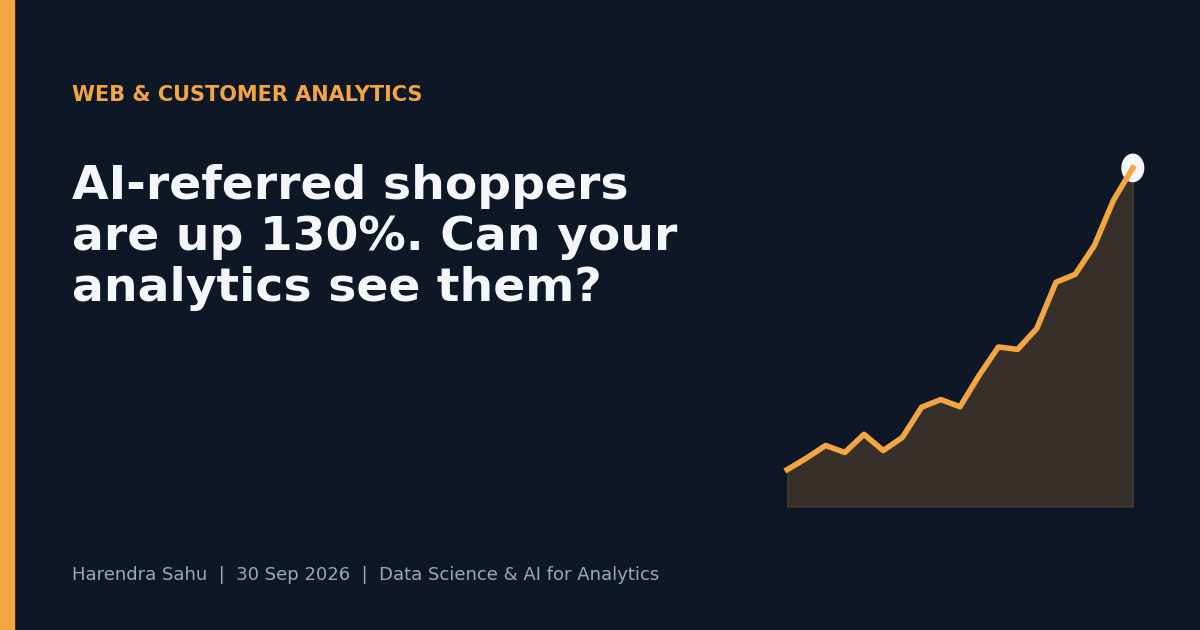
Adobe forecasts that US online holiday spending will reach $275.1 billion across November and December 2026, up 6.7% on last year. The number that caught my eye was a different one: traffic to retail sites referred by AI chat tools and AI browsers is expected to grow 130% year over year.
Adobe bases the forecast on more than 1 trillion visits to US retail sites tracked through Adobe Analytics, covering 100 million SKUs in 18 product categories. It's a US figure, but it's worth checking whether the same trend is showing up in your own accounts.
Why this is a measurement problem first
When a shopper asks a chatbot for "the best running shoes under $120" and clicks through, the visit often lands in your reports with a messy source. Some AI tools pass a clean referrer. Others show up as direct traffic, or under a referral domain nobody on the team recognises. If your channel grouping was set up two years ago, your AI traffic is probably hiding in "Direct" or "Referral".
Budget follows right marketing channel attribution. If a growing channel is invisible, it gets no credit, and the channels around it get credit they didn't earn.
Three fixes worth making before November 2026
-
Firstly, create an AI channel. In GA4, build a custom channel group with a rule that matches known AI referrers such as chatgpt.com, perplexity.ai, gemini.google.com and copilot.microsoft.com. Place it above the default Referral rule so it catches those sessions first, and review the referral report each month for new domains.
-
Secondly, compare what AI crawlers take with what they send back. In August, Microsoft Clarity added an AI Scrape-to-Referral Ratio card to its Bot Analytics. It compares how often each AI operator crawls your site with how many visitors it refers, and you can open session recordings filtered by AI source. A crawler that takes a lot and sends little is useful input for your content and robots.txt decisions.
-
Thirdly, look at behaviour as well as volume. Compare engagement rate, pages per session and conversion rate for AI-referred sessions against organic search. A visitor who arrives with a shortlist from a chatbot may behave very differently from one who arrives from a search results page.
What else Adobe expects
Mobile is forecast to account for 57.4% of holiday online spend. Social media is expected to grow its share of revenue by 17%, affiliates and partners by 12%, and paid search by 4%. Cyber Monday alone is projected at $15.1 billion.
Key takeaway for reporting teams
- AI assistants are turning into a shopping channel, and most reporting setups weren't built with them in mind.
- It is a good time to give AI as its own channel in your reports and share the numbers with whoever owns the budget.
Have you split out AI referrals in your analytics yet? Share what you found in the comments.